
Summer brings ideal driving conditions, but it can also be one of the toughest seasons on your car’s exterior. While most people associate this with winter, prolonged sunshine, high temperatures, and more can all take a surprising toll on your paintwork.
By knowing how to protect your car’s finish during the summer months, though, there shouldn’t be anything to worry about.
Maintain Protective Coatings
Waxes and modern paint sealants act as a barrier between your car and the elements. Applying a fresh layer every few months helps shield the paint from UV exposure, environmental fallout, and everyday wear and tear.
For drivers who want to understand different finishes, repair products, and maintaining car paint, more than a few resources can help explain the options for your specific car and the kind of paint it has.
Wash Your Car More Often
Every car owner knows they need to wash their car. But, you’ll often need to do this a lot more than you’d expect. Warm, dry weather encourages dust, pollen, and road grime to build up quickly. They might seem harmless, but they can wear down your protective coatings.
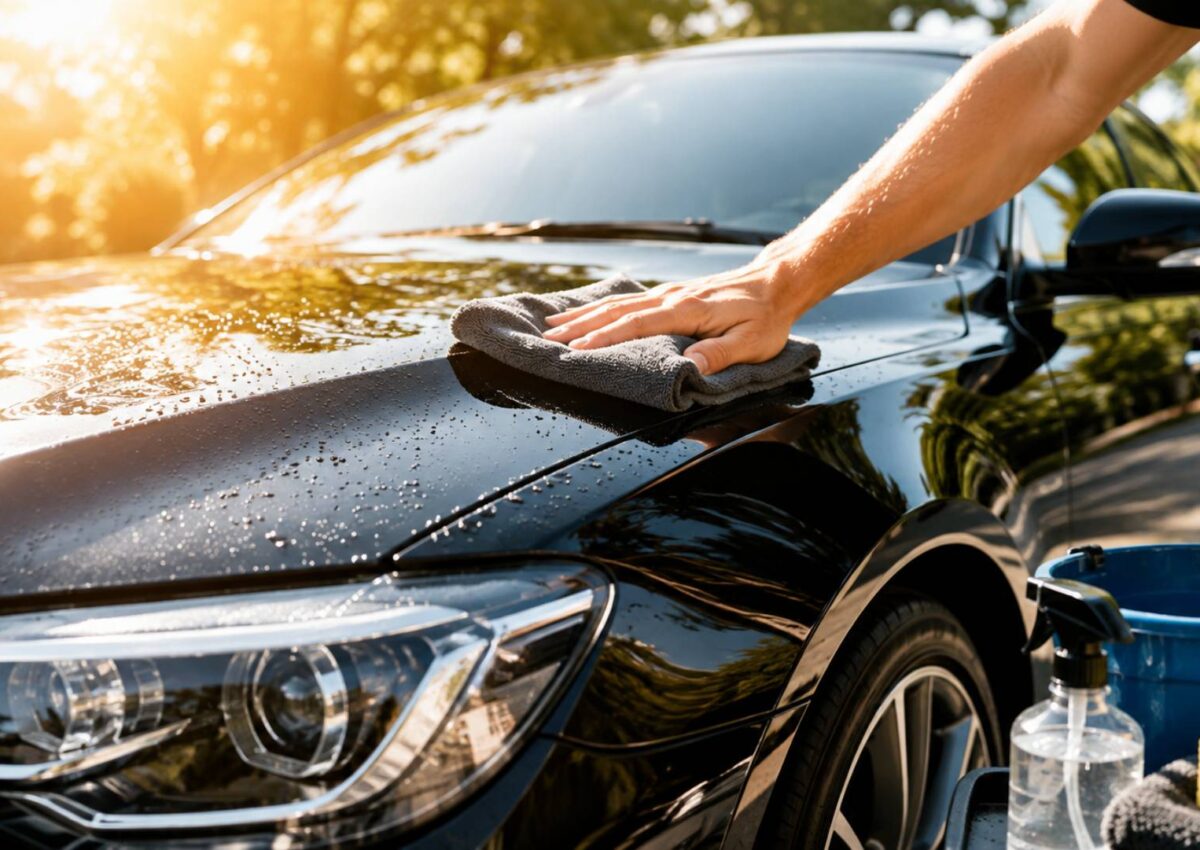
Regular washing gets rid of abrasive dirt and debris before they have the chance to damage the paintwork. Using a pH-neutral cleaner and a microfibre wash mitt helps minimise swirl marks, and drying with a clean microfibre towel stops water spots from forming.
It’s also worth washing your car right after long motorway journeys, where insects can get baked onto the front bumper and bonnet.
Avoid Automatic Car Washes
Speaking of washing your car, you could think using an automatic car wash is a great idea. They’re quite popular because they’re convenient, but they can leave fine scratches that become especially noticeable under the summer sun.
Whenever you can, you’re better off handwashing your car or using touchless car washes, both of which can be gentler alternatives for your car’s finish.
Park Smarter Whenever Possible
Where you park has a noticeable impact on the paintwork’s condition. While parking beneath a tree offers shade, for example, it also increases sap exposure, and potential damage from falling debris and birds.
Covered parking and shaded spaces away from overhanging branches provide better protection from both UV rays and natural contaminants. If this isn’t possible, a breathable outdoor car cover could be the best option to go for.
Don’t Ignore Bird Droppings
Most drivers think bird droppings are just something they need to clean off whenever they get around to it. But, it’s highly acidic and can start damaging paint surprisingly quickly, especially when it’s in direct sunlight.
Tree sap presents a similar problem, becoming harder to remove the longer it’s on your car. Keeping a small bottle of quick detailer spray and a clean microfiber cloth in the boot lets you deal with these quickly and easily, helping protect your car’s finish.
Looking after your car’s paintwork maintains its appearance while preserving its long-term value. That means knowing how to protect your car’s interior. Thankfully, that shouldn’t have to be hard.