
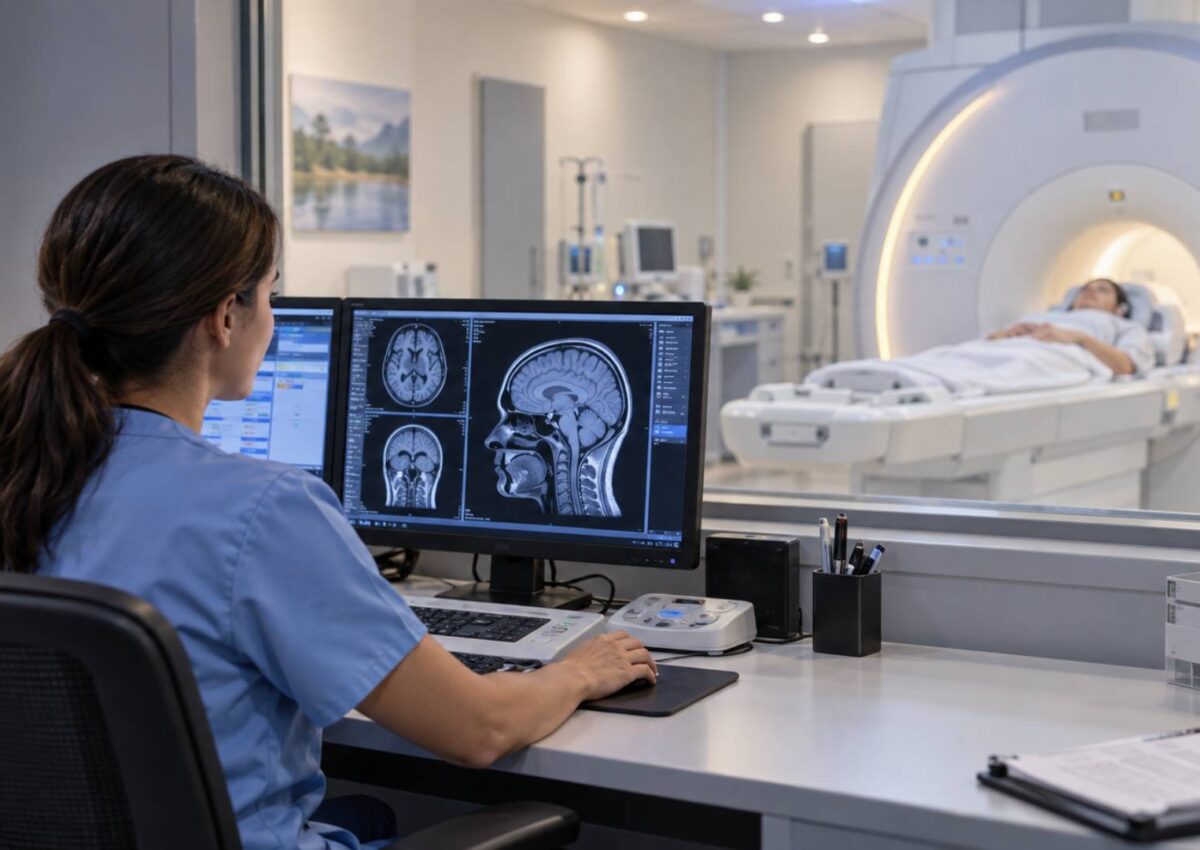
Feeling anxious about an enclosed scanner is common enough that imaging teams are used to discussing it. The important step is to raise the concern before the appointment. Anxiety can feel harder to manage when a person does not know what the room, machine or instructions will be like, so practical information and an agreed plan can reduce some of that uncertainty.
Tell the practice before the scan
When booking or confirming the appointment, patients can tell medical imaging services that enclosed spaces are difficult for them. The team can explain what type of scanner is used, how the person will be positioned and what communication is available during the examination. Different scans and body areas involve different equipment, so a previous experience may not be identical to the new appointment.
Early contact also gives time to discuss whether any extra support is appropriate. If a person believes they may need medication for anxiety, that should be raised with a doctor rather than arranged independently. Medicines can have safety effects and may mean the patient needs someone else to drive or accompany them. The imaging practice can explain its own requirements.
Understand what will happen
For MRI, the patient usually lies on a moving table inside a tunnel-shaped scanner. The machine makes loud sounds while images are being collected, and hearing protection is normally provided. MRI creates images with a powerful magnet and radio waves and does not use x-rays. Because of the magnetic field, screening for metal and implants is a key part of the appointment.
Appointments across medical imaging services can feel very different. A CT scanner has a shorter, ring-shaped opening, while many ultrasound examinations are carried out with a handheld probe over the skin. The test chosen depends on the clinical question. Patients should not swap or delay a referred examination based only on scanner shape without speaking to the referring clinician.
Use the communication options
People often worry that they will be unable to get the staff’s attention once a scan begins. Before starting, medical imaging services can explain how the radiographer or technologist will communicate with the patient and how the patient can signal if they need help. Knowing the system in advance can make the procedure feel less unpredictable.
It can also help to ask how long each image sequence or stage is expected to last. Total appointment times vary, and the person may not be in the same position for the whole visit. Staff can explain what stillness is required and when instructions may be given. Patients should say if pain or another issue makes a position difficult rather than trying to hide the problem.
Prepare for the parts you can control
Follow the written preparation instructions for the specific scan. Wear or bring what the practice recommends, arrive with enough time for screening and tell staff about relevant implants, operations, pregnancy concerns or health conditions when asked. Rushing in late can add stress to an already unfamiliar situation.
Some people find simple coping methods useful, such as slow breathing, closing their eyes before moving into the scanner or focusing on the staff member’s instructions. These are comfort strategies, not a substitute for medical support when anxiety is severe. A patient can ask what is permitted during the examination, since equipment and safety rules vary.
Keep the purpose in view
The scan has been requested to answer a clinical question, not to test how well a patient handles anxiety. If distress becomes a barrier, the right response is to discuss it, not feel embarrassed. The referring clinician and imaging team can consider what is safe and practical for the required examination.
Preparing early gives the imaging team more opportunity to explain the environment and address concerns within their role. The final plan should suit the particular test and the person’s health needs.